

Published October 2021 and kept as a record. The figures and the law have moved on since it was written. For the current position see the October 2026 vacancy figures. Note added 21 October 2026.
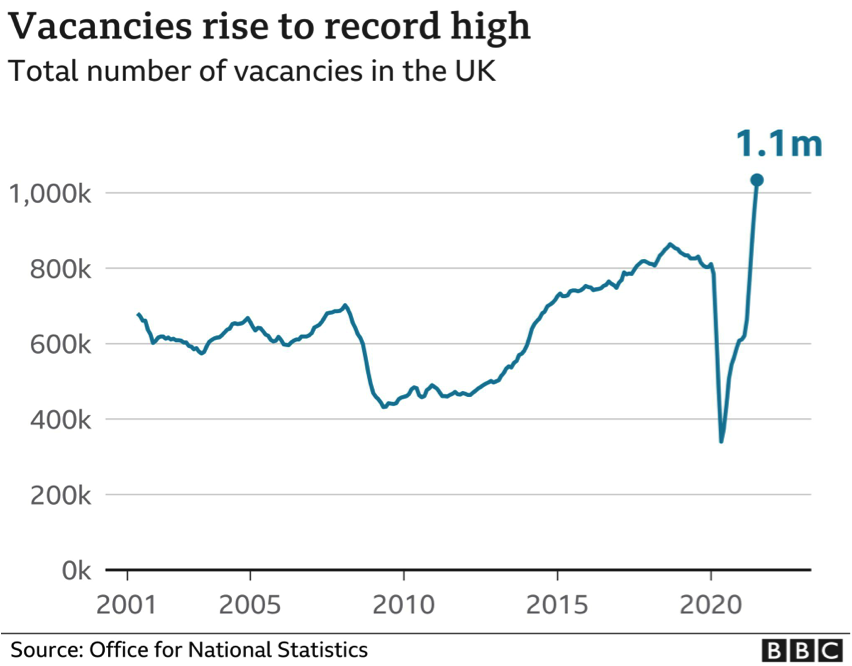
The number of job vacancies in the UK has hit a record high, according to figures released by the Office for National Statistics. The figures showed that the number of employees on payrolls has increased 207,000 to a record 29.2 million in September.
Darren Morgan, director of economic statistics at the ONS, comments, ‘The jobs market has continued to recover from the effects of the coronavirus, with the number of employees on payroll in September now well exceeding pre-pandemic levels.’
Recovery is further?
Chancellor Sunak said it was encouraging to see government policies working. "The number of expected redundancies remained very low in September, there are more employees on payrolls than ever before and the unemployment rate has fallen for eight months in a row."
However, there are concerns that labour shortages in the UK could stunt economic recovery from the recent pandemic. Yael Selfin, Chief economist at KPMG comments, “The recovery is testing the capacity of the economy to adjust to a new post-pandemic environment, a task made more difficult by the reduced availability of overseas workers."
Sectors with the largest increases in vacancies included accommodation and food services, professional activities, and manufacturing. Hospitality is the sector with the most vacancies per 100 workers.
A shortage of lorry drivers, which the industry has blamed on Brexit and tax changes, has affected fuel supplies in recent weeks and disrupted food supply chains.
The Institute for Employment Studies (IES) suggested labour shortages were "affecting the whole economy, and where likely between a quarter and a third is explained by lower migration.”
Tony Wilson, director of the IES, says, "These shortages are holding back our economic recovery, and won't fix themselves by just exhorting firms to pay people more."
The Role of Furlough
The recent hiring and vacancies level, where companies hired more workers than they did during the same month last year, means that companies will need to hire additional workers, rather than lay off currently employed ones, to fill in job vacancies.
The government's furlough scheme, which enabled many workers to continue to receive a paycheck during the Covid pandemic, ended at the end of September.
Though it had been predicted, not many employees lost their jobs in the past few months. While most companies have not announced any plans to lay off workers, recent data suggests that average employees' wages are increasing at a steady rate.
However, ONS claims this has been impacted by lower paid jobs during the pandemic and by comparisons with last year when more workers were on furlough. The number of people unemployed in the June-to-August period fell by 126,000 to 1.5 million, the ONS said, while the number employed rose 235,000 to 32.4 million.
The Director’s Say
BIOR Director, Azmat Mohammed comments, “If you have good employees and you want to keep them, then pay them a wage that makes sure they stay onboard. The government has introduced higher wages however, there are a lot of vacancies which implies a difference between jobs people want and the ones that are available.”